Integrating 3D Layered Carnation Designs into Professional Creative Workflows
In the evolving landscape of digital fabrication and graphic design, the transition from a flat concept to a tangible, dimensional object requires precise planning and high-quality assets. The 3D Layered Carnation represents more than just a floral motif; it is a sophisticated design element that bridges the gap between traditional papercraft aesthetics and modern laser-cutting or vinyl-cutting technologies. For professionals ranging from small business owners to freelance designers, understanding how to effectively implement these layered designs can significantly enhance product offerings, streamline production workflows, and deliver emotionally resonant results for end clients.
The carnation has long been a symbol of congratulations and blooming love. Specifically, red carnations convey deep admiration and affection, often serving as a cute yet profound plea, asking, “Can you feel my love?” This symbolic weight makes the flower particularly suitable for projects targeting individuals who are secretly in love or wishing to express nuanced emotions. When this symbolism is combined with the technical precision of a 3D layered design, the result is a product that is both visually striking and emotionally impactful. However, achieving this result requires a clear understanding of the file formats, preparation steps, and integration strategies involved in using digital cut files.
Understanding the Asset Specifications and Compatibility
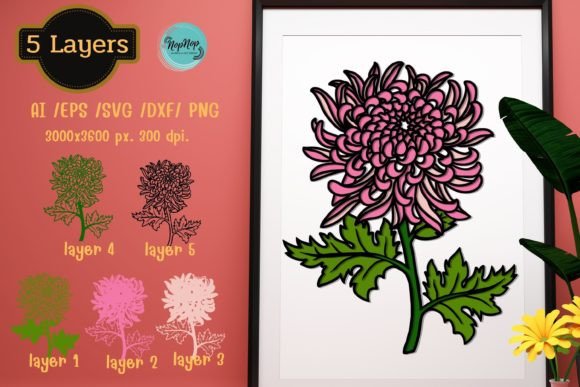
Before integrating any digital asset into a production pipeline, it is crucial to verify its technical specifications. The 3D Layered Carnation files provided in this package are optimized for high-resolution output and versatile compatibility across industry-standard software. The artboard size is set at 3000 × 3600 pixels, which translates to a physical dimension of 10 × 12 inches at a resolution of 300 DPI. This resolution is critical for ensuring that edges remain crisp and details are preserved, whether the final output is a large-scale print or a intricate laser cut.
These files are delivered as a digital download only, contained within a single ZIP file. Inside, you will find five distinct layered designs. The versatility of this package lies in its broad format support, ensuring that regardless of your preferred toolchain, the assets are ready for immediate use. The included formats are:
- AI and EPS: Compatible with Adobe Illustrator, Make The Cut, Corel Draw, and Inkscape. These vector formats are essential for scaling designs without loss of quality, allowing you to adjust the size of the carnation to fit various project requirements.
- SVG: Ideal for users of Cricut Design Space, Silhouette Designer Edition, and ScanNCut. SVGs maintain vector data while being widely supported by web-based and consumer-level cutting machines.
- DXF: Specifically optimized for Glowforge and other laser cutting platforms that prioritize this format for precise path definition.
- PNG: High-resolution raster images. It is important to note that the actual PNG files provided are black, designed specifically for silhouette cutting or masking purposes. Color PNGs are included solely as examples to visualize the final layered effect.
Understanding these distinctions prevents workflow bottlenecks. For instance, attempting to use a raster PNG for a vector-based laser cut may result in poor edge quality, whereas using the AI or DXF files ensures the machine reads the cut paths accurately.
Workflow Integration: From Concept to Production
Implementing the 3D Layered Carnation into your creative process involves several stages, from initial selection to final assembly. This design is not merely a static image but a component of a larger manufacturing or crafting process. Here is how it fits into various professional workflows.
Pre-Production Planning and Material Selection
The success of a layered paper craft depends heavily on material choice. Since the design relies on depth and shadow to create its 3D effect, the contrast between layers is vital. When preparing for a project, consider choosing papers of different colors or textures. While the digital file provides the structure, the physical materials provide the aesthetic impact. For a romantic theme emphasizing the "deep admiration" associated with red carnations, using varying shades of red, pink, and cream can create a subtle gradient effect that enhances the visual depth.
Professionals should also account for the thickness of the material. Cardstock is commonly used, but heavier papers may require adjustments in laser power or blade depth. Testing a single layer before committing to a full batch run is a best practice that saves time and reduces waste.
Digital Preparation and File Management
Once the appropriate file format is selected based on your hardware, the next step is digital preparation. If you are using Adobe Illustrator or Corel Draw, open the AI or EPS file to inspect the layers. Ensure that each petal and leaf is on a separate layer if you plan to automate color sorting for cutting. For users of Cricut or Silhouette machines, importing the SVG file allows for easy manipulation within the design space. You can resize the 10×12 inch design to fit smaller cards or larger wall art, maintaining the aspect ratio to preserve the structural integrity of the layers.
It is important to remember that any background pictured in promotional listings is not included in the download. The focus is strictly on the carnation elements. This modularity allows you to integrate the flower into broader compositions, such as greeting cards, wedding invitations, or framed art pieces, without being constrained by a pre-set background.
Execution: Laser Cutting and Vinyl Application
For laser cutting enthusiasts and professionals using machines like the Glowforge, the DXF file offers the most reliable path definition. Set your machine parameters according to the material thickness. The 300 DPI resolution of the source design ensures that even intricate curves in the petals are rendered smoothly. After cutting, organize the pieces by layer. Labeling each stack can prevent confusion during assembly, especially when producing multiple units for commercial sale.
If you are using the colored PNG files for printing rather than cutting, ensure your printer is calibrated for high-quality photo output. These files serve as excellent clipart for digital invitations or printed merchandise where physical layering is not feasible. However, for the true 3D effect, physical assembly is required.
Enhancing Value Through Symbolism and Presentation
Beyond the technical execution, the value of the 3D Layered Carnation lies in its emotional resonance. As a symbol of congratulations and blooming love, it is perfectly suited for occasions such as anniversaries, Valentine’s Day, or secret admirer gestures. When marketing products made with these files, highlight the symbolism. Describe how the red carnation expresses love in a "cute plea," appealing to customers who want to convey deep feelings without being overly aggressive.
For educators and hobbyists, this project serves as an excellent introduction to layered design principles. It teaches spatial awareness, color theory, and precision cutting. By breaking down the complex flower into manageable layers, learners can understand how 2D shapes combine to create 3D forms. This educational angle can expand the market for these files beyond commercial crafters to include schools and community workshops.
Quality Control and Long-Term Use
To ensure consistency across multiple projects, establish a standard operating procedure for handling these files. Store the original ZIP file in a secure, backed-up location. Create templates in your primary design software that pre-load the carnation layers, saving time on future projects. Regularly update your knowledge of software updates for tools like Cricut Design Space or Adobe Illustrator, as changes in import settings can occasionally affect how SVG or AI files are interpreted.
Quality control should also extend to the final assembly. Check for any loose fibers or incomplete cuts before gluing layers together. Use acid-free adhesives to ensure the longevity of the paper, preventing yellowing or degradation over time. This attention to detail distinguishes professional-grade crafts from amateur attempts, building trust with clients and enhancing your brand reputation.
In conclusion, the 3D Layered Carnation is a versatile and meaningful asset for any creative professional. By understanding its technical specifications, integrating it smoothly into your workflow, and leveraging its symbolic power, you can create products that are not only visually stunning but also emotionally engaging. Whether you are a small business owner looking to expand your product line or a hobbyist seeking a challenging project, these digital cut files provide the foundation for high-quality, professional results.